Providing life skills, safety skills, and child care training in order to build safer communities.

Managing behavior is often the hardest part of child care. It’s what parents know from first-hand experience, and it’s why we teach behavior tips to teens who take Safe Sitter®. Try these behavior management tips whenever you find yourself dealing with difficult behavior.
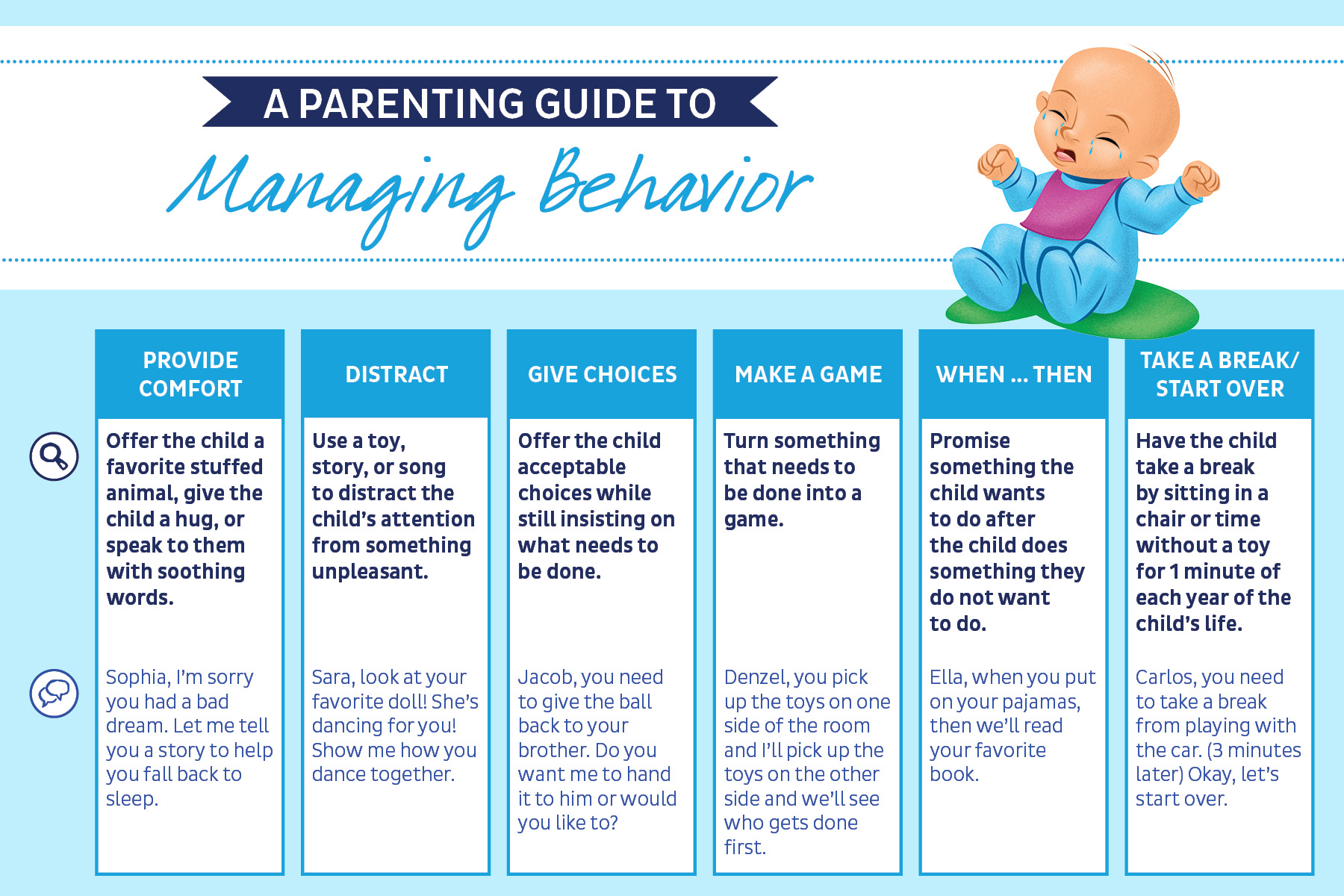
Offer the child a favorite stuffed animal, give the child a hug, or speak to them with soothing words. Say something like, “Sophia, I’m sorry you had a bad dream. Let me tell you a story to help you fall back to sleep.”
Use a toy, story, or song to distract the child’s attention from something unpleasant. Say something like, “Sara, look at your favorite doll! She’s dancing for you! Show me how you dance together.”
Offer the child acceptable choices while still insisting on what needs to be done. Say something like, “Jacob, you need to give the ball back to your brother. Do you want me to hand it to him or would you like to?”
Turn something that needs to be done into a game. Say something like, “Denzel, you pick up the toys on one side of the room and I’ll pick up the toys on the other side and we’ll see who gets done first.”
Promise something the child wants to do after the child does something they do not want to do. Say something like, “Ella, when you put on your pajamas, then we’ll read your favorite book.”
Have the child take a break by sitting in a chair or time without a toy for 1 minute of each year of the child’s life. Say something like, “Carlos, you need to take a break from playing with the car. (3 minutes later) Okay, let’s start over.”
Try these tips and consider implementing a behavior scale at home to help your child understand your expectations and recognize good behavior.