Providing life skills, safety skills, and child care training in order to build safer communities.

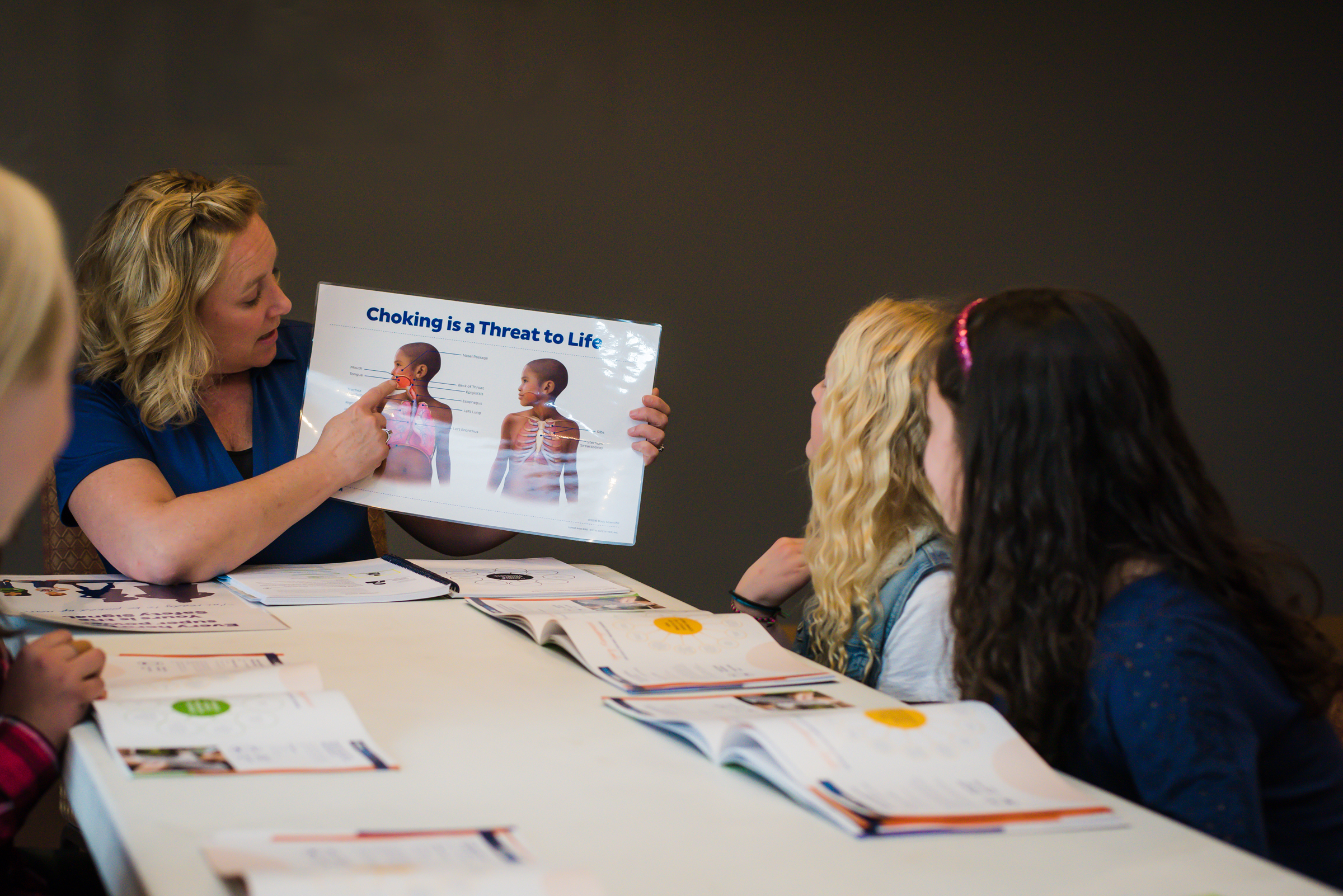
So far, nearly 200 lives have been saved by graduates who knew what to do in an emergency. Here’s what we teach teens about choking and why:
Young children are curious and they explore by putting everything in their mouths. Small, interesting, shiny objects are likely to attract their attention and they have small airways which are easy to block. Young children typically don’t take the time or have the ability to chew food well. Those under age 5 simply don’t have the molar tooth development to chew smooth, round foods.
Coughing is good. If a child is coughing, the child is still moving air. Coughing helps! However, choking means the child will not be able to cough, talk, cry, or breathe, and will look frightened. They can’t get rid of the blockage in their airway without help and this is a threat to life. It’s important to act quickly to perform the choking rescue skills you’ve been taught. If the object is expelled after choking, the child still needs to be seen by a physician.
Generally, for infants less than one year back blows and chest thrusts should be used to expel the object in the airway. Walking toddlers and older children should be rescued from choking with back blows and abdominal thrusts. The most important thing is to make a decision quickly about the age and size of the child based on what you know, then, calmly start the steps to rescue the choking child. However, training is absolutely necessary in order to provide effective and safe rescue techniques. You should only perform back blows, chest thrusts, and abdominal thrusts if you have had the proper training. Otherwise, you should call 9-1-1.
It’s important to stay calm, help the child stay calm, and not focus on the vomit or the smell. You should help the child clean up and offer comfort by taking the child with you when you call the parent. Although it’s not fun to deal with vomit, you saved a child’s life and you’re a hero.
Has your young teen taken a babysitting training course that includes choking rescue? If not, consider signing him or her up for Safe Sitter®. Use our Find a Class tool to find a Safe Sitter® Provider near you.